
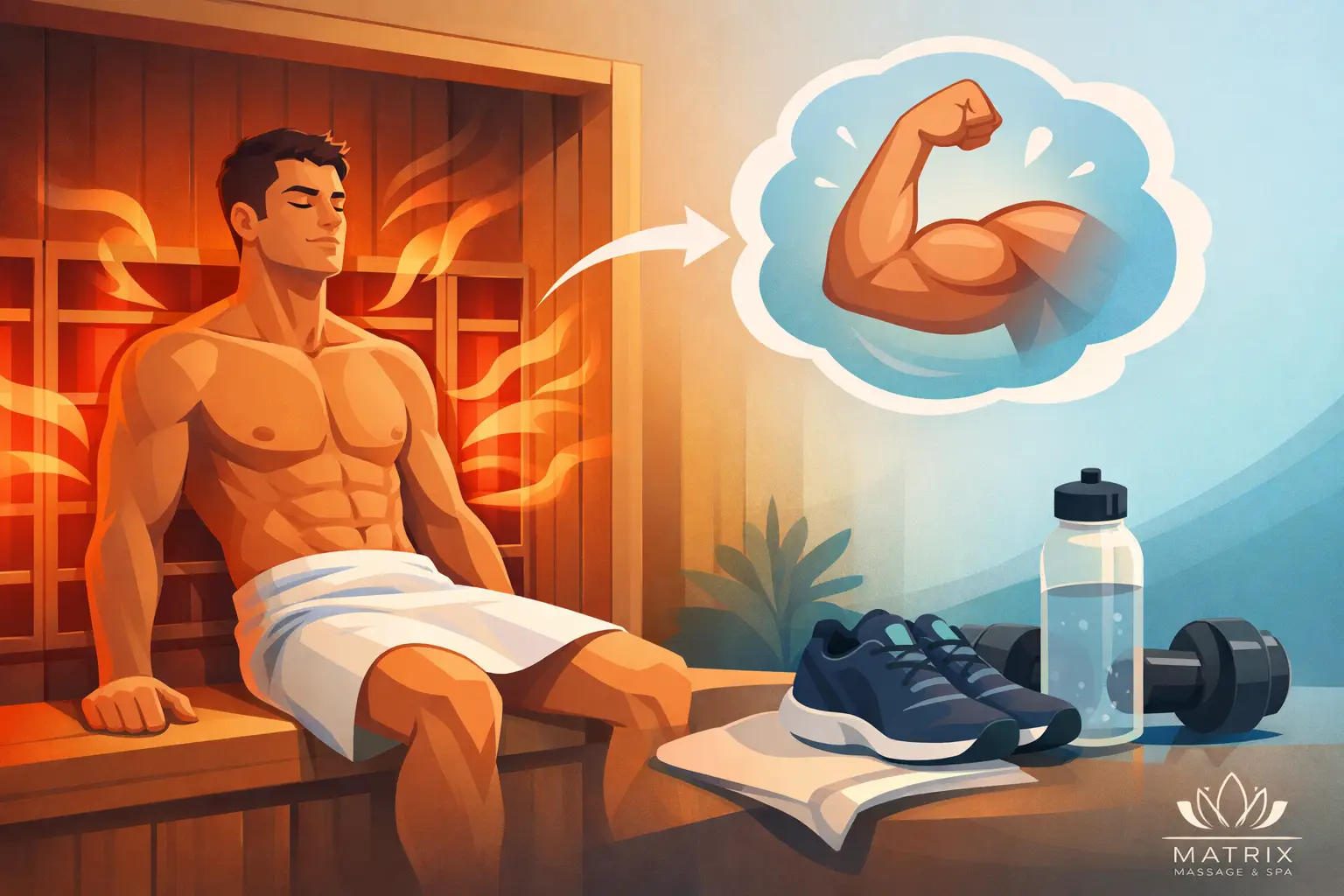
A hard workout can leave your muscles feeling heavy long after you have finished the last set, run, or game. An infrared sauna for muscle recovery offers a quiet, warming reset that may help you feel less stiff, more relaxed, and better prepared for the rest of your recovery routine. It is not a substitute for sleep, nutrition, or professional care when pain is significant, but it can be a restorative addition to a well-rounded wellness plan.
For active adults, busy professionals, and anyone carrying daily tension in the shoulders, back, hips, or legs, heat can feel especially welcome. The value is not only physical. Taking time to slow down after demanding activity gives the nervous system a chance to settle, which can make recovery feel more complete.
How an Infrared Sauna for Muscle Recovery Works
Traditional saunas warm the air around you. Infrared saunas use infrared light to create a gentler, more direct warming sensation in the body while typically operating at a lower ambient temperature. Many guests find this more comfortable than the intense heat of a conventional sauna, particularly when they want to relax without feeling overwhelmed by the room.
As your body warms, circulation increases and muscles often feel looser. That warmth may temporarily reduce the feeling of tightness and make it easier to move comfortably after training or a long day at a desk. For someone with routine post-exercise soreness, the experience can be a calming way to transition from effort into rest.
The key word is “may.” Research around heat therapy and athletic recovery is promising in some areas, but an infrared sauna is not a guaranteed cure for soreness or an injury. It does not repair a strained muscle, replace rehabilitation, or erase the need for adequate recovery between demanding workouts. Its most practical role is supportive: comfort, relaxation, and a useful space to listen to what your body needs.
Benefits You May Notice After Exercise
Post-workout muscle soreness is influenced by training intensity, unfamiliar movement, sleep, hydration, and overall stress. A sauna session will not change every one of those factors, yet the warmth can make a noticeable difference in how your body feels.
Relief from Everyday Tightness
After strength training, cycling, hiking, or a full day on your feet, muscles can feel guarded and stiff. Gentle heat may help soften that sensation temporarily, especially in commonly overworked areas such as the calves, hamstrings, glutes, lower back, and shoulders. Many people appreciate an infrared sauna on active recovery days, when the goal is to support comfortable movement rather than push through another intense session.
A Calmer Nervous System
Recovery is not only about the muscles themselves. Stress can keep the body braced, interfere with restful sleep, and make soreness feel more pronounced. A quiet sauna session creates an intentional pause from screens, schedules, and stimulation. Slow breathing in a comfortable warm environment can help shift the body toward relaxation, making it a natural complement to massage and other restorative care.
Better Preparation for Mobility Work
Warm muscles can feel more receptive to light stretching or mobility exercises. After your session, consider a few easy movements that match your activity: gentle hip mobility after a long run, chest-opening stretches after upper-body training, or ankle and calf movement after a hike. Avoid forcing deep stretches simply because you feel warmer. Recovery should leave you feeling better, not more strained.
A Consistent Recovery Ritual
The best recovery tools are often the ones you can use consistently. For some guests, an infrared sauna becomes a reliable part of a weekly wellness rhythm: train, hydrate, warm up, move gently, and rest. That ritual can make it easier to protect time for recovery before tension builds into a larger problem.
When to Use Sauna Heat
Timing depends on your workout, your goals, and how you feel that day. There is no single perfect window for everyone. Some people enjoy heat later the same day after they have cooled down, eaten, and rehydrated. Others prefer an infrared sauna on the following day, when stiffness has begun to set in.
If your main goal is relaxation and relief from routine tightness, use sauna heat when you can follow it with water, a nourishing meal, and restful sleep. If you are preparing for an activity, keep the session brief and avoid overheating. Heat may leave you feeling relaxed, but it can also contribute to fatigue and fluid loss, which is not ideal before a challenging workout or competition.
For fresh injuries, swelling, bruising, or sharp pain, heat is usually not the first choice. In those situations, stop the activity that caused the pain and seek guidance from a qualified health professional. A soothing sauna session should never be used to mask pain that needs assessment.
A Comfortable, Safer Sauna Routine
You do not need to turn recovery into an endurance event. A shorter, comfortable session is often more beneficial than trying to stay in the heat as long as possible. Start modestly, especially if you are new to infrared sauna therapy or returning after time away.
Before entering, drink water and avoid arriving dehydrated from a workout, alcohol, or a long day outdoors. During the session, pay attention to your body. Lightheadedness, nausea, headache, unusual weakness, or a racing heart are signs to leave the sauna, cool down, and rehydrate.
Afterward, allow a few minutes to rest before rushing back into your day. Drink water, replace electrolytes when appropriate for your activity level, and choose a meal or snack with protein and carbohydrates if you are recovering from training. A light walk or easy mobility work can also help you transition out of the session.
People who are pregnant, have cardiovascular concerns, have uncontrolled blood pressure, take medications that affect heat tolerance, or have other health conditions should speak with their medical provider before using a sauna. The same applies to anyone who has recently been ill, is feeling unwell, or has had a significant injury. Personalized care begins with knowing when to slow down.
Pairing Infrared Heat With Massage and Hydrotherapy
Heat and hands-on therapy can work beautifully together when the goal is to relieve muscular tension and encourage deep relaxation. An infrared sauna can help you arrive feeling warmed and settled, while a customized massage can address the areas that need more focused attention. For active guests, a sports or deep tissue massage may be appropriate; for those whose tension is tied to stress and daily demands, a Swedish massage may offer a gentler restorative experience.
The order matters less than your comfort and treatment goals. Some guests prefer heat before massage to relax into their service. Others prefer it afterward as a quiet extension of their spa visit. At Matrix Massage & Spa, the hydrotherapy experience makes it possible to tailor that rhythm around the kind of recovery your body is asking for, whether that means gentle warmth, contrast therapy, or simply uninterrupted time to rest.
Cold plunge therapy can also have a place in recovery, but it is a different tool with a different sensation. Some active adults enjoy alternating heat and cold for an invigorating experience, while others find a single warm session more calming. If you are new to contrast hydrotherapy, start conservatively and prioritize how you feel rather than chasing an extreme temperature challenge.
Keep the Rest of Recovery in View
An infrared sauna can feel luxurious, and it should. But its greatest value comes when it supports the essentials rather than standing in for them. Muscles recover through rest, enough food, hydration, smart training progression, and movement that respects your current capacity.
If soreness is lasting longer than expected, repeatedly returns in the same spot, affects your sleep, or changes how you walk, lift, or move, treat that as useful information. Scaling back and getting appropriate support is a sign of thoughtful training, not lost progress.
Make space for the recovery that feels sustainable. A warm sauna session, a skilled massage, a glass of water, and an earlier bedtime may not be dramatic, but together they can help your body feel cared for long after the workout is over.