
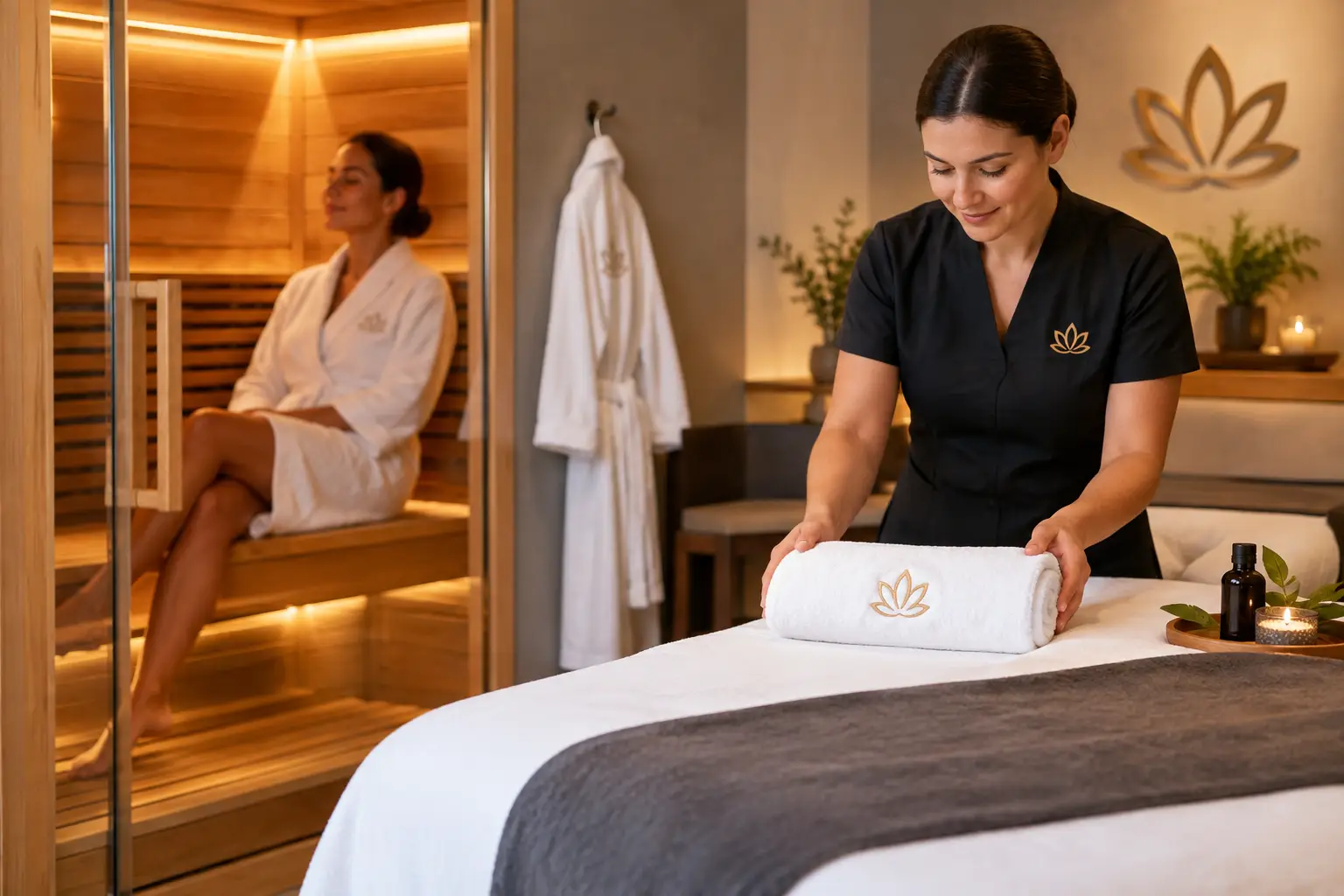
A sauna before massage can turn a great appointment into a more deeply relaxing spa experience – provided the timing and intensity feel right for your body. Gentle heat can help you arrive feeling looser, calmer, and more prepared to settle into your customized treatment. But more heat is not always better. The goal is to feel comfortably warm and refreshed, not overheated, thirsty, or drained before your massage begins.
For many guests, pairing hydrotherapy with massage is one of the most restorative ways to step away from a demanding week, a hard training schedule, or hours at a desk. A little thoughtful planning helps you get the most from both.
Is a Sauna Before Massage a Good Idea?
For most healthy adults, a brief sauna session before massage can be a wonderful choice. Warmth encourages the body to relax and may make tight, overworked areas feel more receptive to the flowing strokes of Swedish massage, focused deep tissue work, or a sports massage designed around recovery goals.
It can be especially appealing when you feel generally stiff from skiing, hiking, cycling, strength training, or simply sitting too long. Salt Lake City’s active lifestyle asks a lot of the body, and a period of quiet heat can create a welcome transition from a busy day into dedicated self-care.
There is also a mental benefit. Massage is often most enjoyable when your nervous system has had time to slow down. Sitting quietly in a sauna, away from notifications and deadlines, gives you a chance to breathe, let your shoulders drop, and arrive more present for your session.
Still, the best pre-massage sauna session is modest. A long, intense heat exposure may leave you fatigued or dehydrated, which can make it harder to relax comfortably on the massage table. Think of the sauna as preparation, not an endurance test.
How Long Should You Sauna Before a Massage?
A comfortable 10 to 15 minutes is often plenty before a massage, especially if you are new to sauna use or have not had much water that day. Experienced sauna guests may prefer a little longer, but there is no prize for staying in past the point of comfort.
Afterward, take several minutes to cool down naturally. Sip water, rinse off if desired, and give your breathing and body temperature time to settle before your therapist begins. If your skin feels very hot, you are sweating heavily, or you feel lightheaded, extend your cooldown or skip the sauna altogether.
The ideal rhythm is simple: warm up, cool down, hydrate, then enjoy your massage. This sequence helps you arrive at the table feeling relaxed rather than rushed.
Infrared sauna or steam room?
Both can complement a massage, but they create a different experience. An infrared sauna offers a dry, gentle-feeling heat that many guests find easy to tolerate before a treatment. A steam room provides moist heat and can feel especially soothing when Utah’s dry air has left you feeling parched.
Your preference matters more than choosing the “best” option. If you tend to feel overwhelmed by humid heat, an infrared sauna may be more comfortable. If steam helps you unwind, a short session can be a lovely part of your spa day. In either setting, listen to your body and keep hydration close by.
Match the Heat to Your Massage Style
The type of massage you have booked can help guide your hydrotherapy plan. Before a Swedish massage, a short sauna session may enhance the sense of ease you are seeking. If your goal is a deeply restful escape, warmth followed by a slower-paced massage can be a natural pairing.
Before deep tissue or sports massage, gentle heat may help you feel more comfortable as your therapist focuses on areas that have been working hard. That said, if you are already sore, tired, or sensitive after an intense workout, a shorter heat session is usually the wiser choice. Tell your therapist how you are feeling so they can tailor pressure and technique to the day you are having.
For hot stone massage, you may prefer to skip the sauna or keep it particularly brief. Hot stones bring their own comforting warmth, and some guests find that layering too much heat makes the treatment feel less relaxing. A calm session in the relaxation area, or a brief cool rinse beforehand, may better balance the experience.
If you are visiting for prenatal massage, comfort and safety should lead the decision. Ask your provider for guidance about heat exposure during pregnancy, and let your massage therapist know where you are in your pregnancy so your session can be appropriately customized.
When to Skip the Sauna Before Massage
A sauna is optional, never required for a meaningful massage. Choose the relaxation amenity that feels best that day, whether that is a quiet seat in the lounge, a hydromassage session, or simply a few unhurried minutes before your appointment.
Skip pre-massage heat if you are feeling ill, feverish, dizzy, unusually fatigued, or dehydrated. It is also wise to avoid it after drinking alcohol, after a very strenuous workout when you have not yet rehydrated, or when you have a headache that heat may worsen.
If you have a health concern, are taking medication that affects your response to heat, or have been advised to limit heat exposure, check with your qualified healthcare professional before using a sauna or steam room. Your spa experience should leave you feeling cared for, not pushed beyond what feels good.
A Better Spa-Day Routine
The details around your sauna session matter as much as the session itself. Arrive with enough time that you do not need to rush from the heat directly onto the massage table. Eat a light meal beforehand if you need one, rather than arriving overly hungry or uncomfortably full. Drink water throughout the day, not just in the final few minutes before your appointment.
Wear comfortable clothing, and plan to remove makeup or skincare products if you intend to use steam. After using a sauna or steam room, a quick shower is considerate and refreshing before your massage. It removes perspiration and helps you feel clean, cooled down, and ready to relax.
At Matrix Massage & Spa, a personalized spa experience can include infrared sauna, steam room, cold plunge, hydromassage, and quiet relaxation amenities. There is no single ideal circuit for every guest. Some people enjoy a short sauna followed by a cool rinse; others prefer warmth before massage and save the cold plunge for another visit. Your comfort, energy level, and treatment goals should set the pace.
Should you use a cold plunge before massage?
A cold plunge can feel energizing and may be a favorite recovery ritual for active guests, but it creates a very different effect than pre-massage warmth. If your primary goal is deep relaxation and softer-feeling muscles, a cold plunge immediately before massage may not be your first choice. You may prefer to enjoy it after your treatment, or reserve it for a separate hydrotherapy visit.
There are exceptions. Some guests simply love the alert, refreshed feeling that contrast therapy brings. If that is you, allow enough time afterward for your body to return to a comfortable temperature before your massage begins. A therapist can provide a more relaxing experience when you are not shivering or trying to warm back up.
Tell Your Therapist What You Did Before You Arrived
A quick conversation helps make your massage more personal. Let your therapist know whether you used the sauna or steam room, how long you spent there, and whether you are feeling especially warm, tired, or sore. They can adjust the room temperature, pressure, pacing, and techniques to help you stay comfortable.
This is also a good moment to share what you hope to feel when you leave: calmer after a demanding week, more comfortable after activity, or simply restored by an uninterrupted hour of care. The best spa days are not about following a perfect formula. They are about choosing the amount of heat, rest, and therapeutic touch that helps you walk back into your day feeling renewed.