
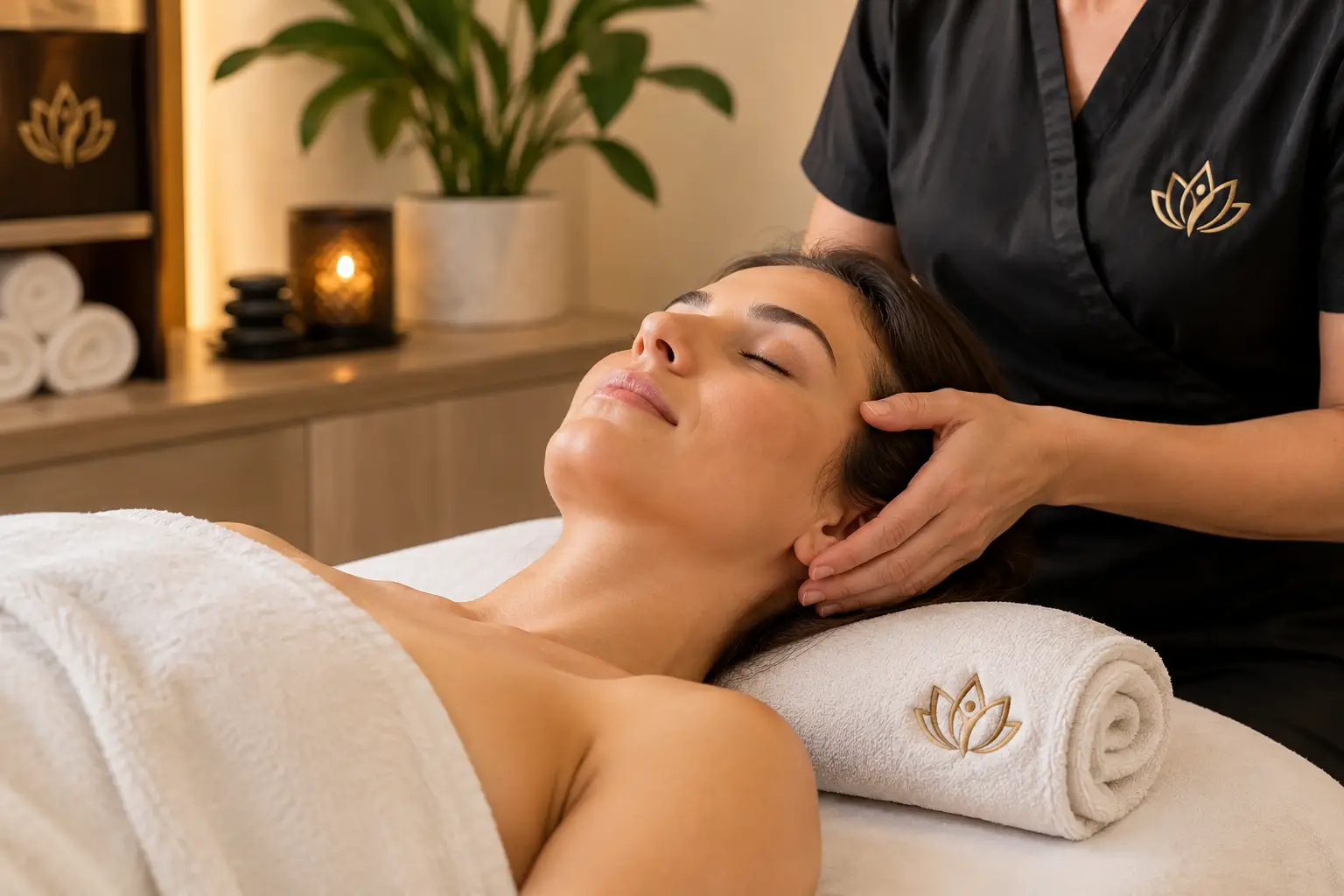
A massage does not always need deep pressure to feel deeply restorative. For guests who feel overstimulated, mentally tired, or simply sensitive to firmer bodywork, the top benefits of craniosacral therapy often come from its quiet, gentle approach. This light-touch service creates room to slow down, settle physical tension, and reconnect with a calmer state of mind.
Craniosacral therapy is especially appealing when your body is asking for care but a vigorous massage does not sound inviting. Rather than working through muscles with broad pressure, the therapist uses a subtle, attentive touch around areas such as the head, neck, shoulders, spine, and sacrum. The experience is unhurried, personalized, and designed to support comfort.
What Craniosacral Therapy Feels Like
Craniosacral therapy is a very gentle style of bodywork. You may remain fully relaxed on the massage table while your therapist places light, still hands at different points of the body. There is no need to brace for intense pressure, stretching, or the post-massage soreness that can occasionally follow deeper work.
Many guests describe the session as quiet and grounding. Some feel a sense of warmth, heaviness, or a gradual release of held tension. Others simply enjoy being still in a serene spa environment, without needing to direct the experience. Responses vary from person to person, and it is perfectly normal to notice subtle changes rather than a dramatic sensation.
Top Benefits of Craniosacral Therapy
A calming reset for a busy mind
When schedules are full and screens, meetings, traffic, and responsibilities compete for attention, relaxation can feel surprisingly hard to access. Craniosacral therapy offers protected time with very little stimulation. The slower pace and light touch can encourage a sense of ease that many guests find helpful after demanding weeks.
This is not about forcing your thoughts to disappear. It is about giving your mind fewer things to manage. For working professionals and caregivers, that quiet can be one of the most valuable parts of the service.
Gentle relief for everyday tension
Many people hold everyday tightness through the jaw, scalp, neck, shoulders, and lower back. Long hours at a desk, frequent travel, hard training sessions, and daily stress can all leave those areas feeling guarded. A craniosacral session may help you become more aware of where you are holding tension and invite those areas to soften.
Because the approach is so gentle, it can be a comfortable option for guests who find deep tissue massage too intense on a particular day. It may also complement other forms of massage when your preference changes from one visit to the next.
A more restful spa experience
The benefits of a massage sometimes continue after the appointment ends. Guests often choose craniosacral therapy when they want to feel settled enough to enjoy a quieter evening, a slower weekend, or a more intentional self-care day. Its relaxed rhythm makes it a natural fit for a spa visit focused on restoration rather than athletic recovery or concentrated muscle work.
At Matrix Massage & Spa, a personalized service can also be part of a larger pause from routine. Pairing bodywork with time to unwind in a calm setting can make the appointment feel less like another task on the calendar and more like the reset it is meant to be.
Support for body awareness
It is easy to move through the day on autopilot until discomfort becomes impossible to ignore. The stillness of craniosacral therapy gives you a chance to notice your breathing, posture, and patterns of tension without judgment. That awareness can be useful long after the session, whether it reminds you to take a break from your desk, unclench your jaw, or build more recovery time into your week.
This benefit is subtle but meaningful. A massage session cannot remove every demand from daily life, but it can help you recognize what your body has been carrying.
A comfortable introduction to massage
First-time massage guests sometimes worry about pressure, discomfort, or not knowing what to expect. Craniosacral therapy can feel more approachable because the work is quiet, gentle, and clearly adaptable. It does not require a high tolerance for pressure, and communication is welcome throughout the session.
If you are new to professional bodywork, tell your therapist what would help you feel comfortable. You can discuss areas you would prefer to focus on, pressure preferences, and any questions about the session before treatment begins. Feeling informed is part of feeling relaxed.
When Gentle Bodywork May Be the Better Choice
Craniosacral therapy is not intended to replace medical care, diagnose concerns, or treat a medical condition. Its value is often in relaxation, comfort, and the way it can complement a thoughtful wellness routine. If you have a health concern, recent injury, are recovering from a procedure, or are unsure whether massage is appropriate for you, consult a qualified health professional first and let your massage therapist know.
The best massage style also depends on what you want from your appointment. If your goal is focused work for tight muscles after lifting, running, or a long day of physical activity, deep tissue or sports massage may be a better fit. If you want warmth and classic relaxation, Swedish massage or hot stone massage may be more your style. Craniosacral therapy stands apart when you want gentle touch, a slower pace, and an especially quiet experience.
There is no need to choose one modality forever. Your body and schedule may call for different care at different times. A skilled therapist can help you select a service that matches how you feel that day.
How to Prepare for Your Session
Arrive with enough time to transition out of your day rather than rushing straight onto the table. Wear comfortable clothing to the spa, hydrate normally, and share any relevant preferences during your intake conversation. You do not need to prepare in a special way or try to “relax correctly.”
During the session, give yourself permission to be quiet. Some guests enjoy conversation, while others prefer to rest with their eyes closed. If the room temperature, positioning, music, or touch needs adjusting, speak up. Personalized care works best when your therapist understands what helps you feel at ease.
Afterward, avoid scheduling more stress than necessary if you can. A few calm moments, a nourishing meal, or a simple evening at home can help preserve the restorative feeling of your visit.
A Gentle Way to Make Space for Yourself
Craniosacral therapy is not about intensity or pushing through discomfort. It is an invitation to pause, soften, and receive care in a way that honors where you are right now. When life feels loud, a gentle session can be a meaningful reminder that rest deserves a place on your calendar.