
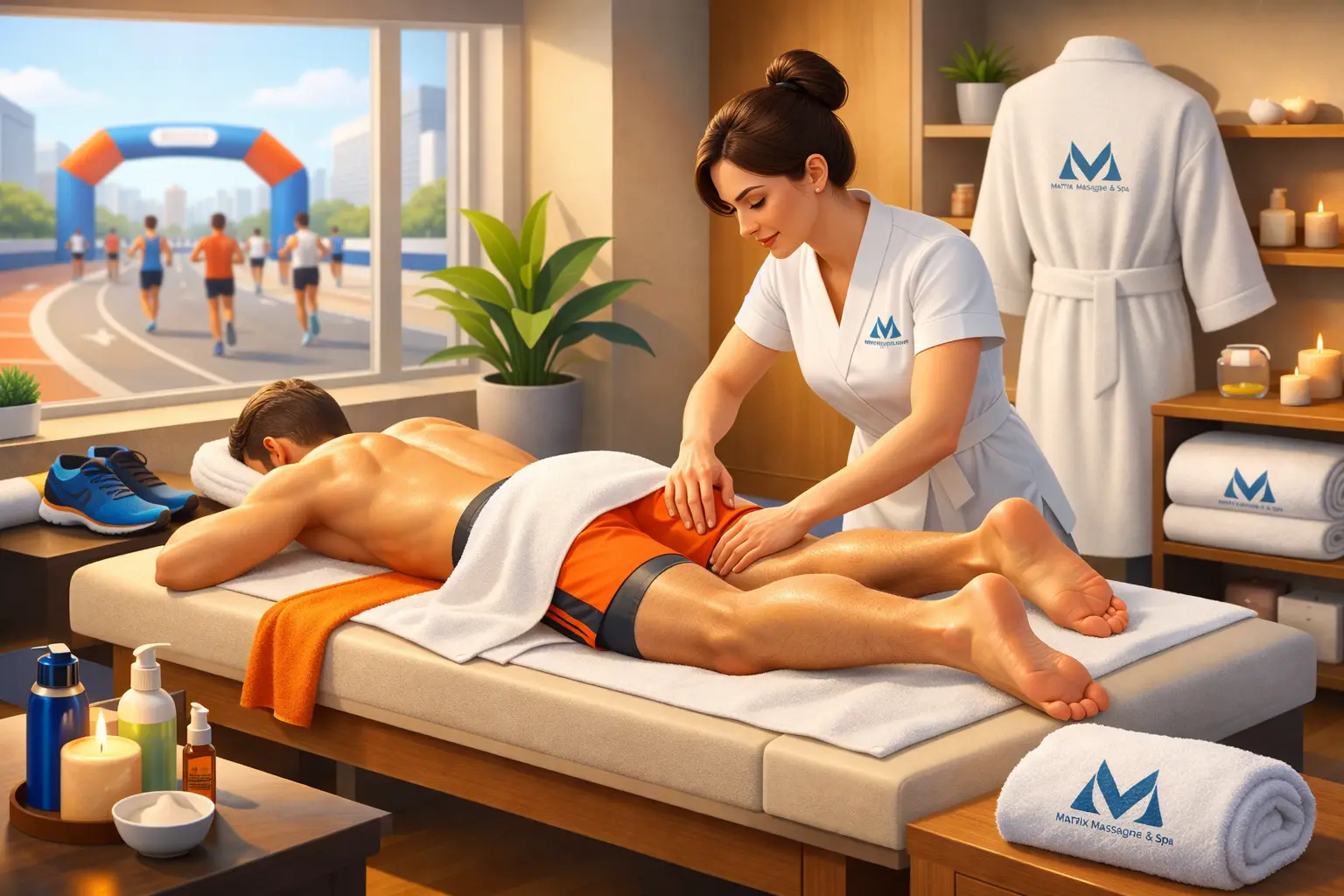
The last miles of marathon training ask a great deal of your body. Calves tighten, hip flexors feel shortened, and the muscles that carried you through every long run can begin to feel less like teammates and more like a collection of complaints. Sports massage for marathon runners is not a shortcut to fitness or a replacement for smart training, but it can be a valuable part of a well-planned recovery routine.
A thoughtful session gives tired tissue focused attention while offering the quieter benefit many runners need most: time to slow down, breathe, and reconnect with how the body is responding to training. The most helpful approach is individualized. Your mileage, race calendar, injury history, sleep, work stress, and current soreness all matter.
What Sports Massage Does for Marathon Runners
Sports massage is a customized, performance-minded treatment designed around the demands placed on your body. For marathon runners, that often means working with the calves, quads, hamstrings, glutes, hips, feet, and lower back. A therapist may use broad warming strokes, compression, targeted deep-tissue techniques, and mobility-focused work based on what feels restricted or overworked.
The goal is not to force a muscle to relax or to make every sensation intense. Effective work can help reduce the feeling of stiffness, support comfortable movement, and create a more settled sense of recovery after high training volume. It may also help you notice patterns early, such as one hip consistently feeling tighter than the other or feet that are taking more strain as your long runs increase.
Massage is best viewed as one piece of the recovery picture. It works alongside appropriate training progression, fueling, hydration, sleep, strength work, mobility, and rest days. If pain is sharp, swelling is unusual, or your gait has changed, a massage appointment should not delay evaluation by a qualified medical professional.
Timing Sports Massage Around Your Training Plan
The right timing depends on whether you are building mileage, tapering, or recovering from the race. A session that feels wonderful during a base-building week may not be the best choice 48 hours before your marathon.
During marathon training
Many runners benefit from regular massage during a training cycle, especially as long runs and weekly mileage rise. Scheduling every two to four weeks can be a practical rhythm, though the ideal frequency varies. A newer runner may prefer occasional sessions around peak weeks, while an experienced athlete with recurring tightness may appreciate more consistent care.
During this phase, communicate clearly about recent workouts and upcoming key sessions. If you have hill repeats tomorrow, your therapist can keep the work restorative rather than overly intensive. You should leave feeling more comfortable and mobile, not as though you have completed another hard workout.
During the taper
Taper nerves can make every small sensation feel urgent. This is a time for calm, lighter sports massage that supports relaxation and comfortable movement without leaving you tender. Avoid introducing aggressive techniques, unfamiliar treatments, or major changes to your routine close to race day.
For many runners, a gentle session five to seven days before the marathon is a comfortable window. Others feel best with treatment earlier in the taper. Your response to massage matters more than a fixed rule, so use previous race cycles as your guide whenever possible.
In the days after the race
Immediately after 26.2 miles, your body needs food, fluids, warmth, and rest. A brief, gentle flush of the legs may feel pleasant for some runners, but deep, focused work is generally better saved until acute soreness has begun to settle. Waiting 24 to 72 hours is common, especially if your legs are swollen, very tender, or simply exhausted.
A post-race session should meet your body where it is. It may include soothing Swedish-style strokes, gentle compression, work around the hips and feet, and time to relax rather than chasing every knot. The purpose is restorative care, not punishment for having raced hard.
What a Productive Session Feels Like
There is a persistent idea that sports massage must hurt to be effective. It does not. Some targeted pressure can feel intense, particularly in well-used calves or glutes, but you should be able to breathe normally and speak comfortably. Pain that makes you brace, hold your breath, or tense against the therapist usually works against the relaxed state you are trying to create.
A caring, confident therapist will ask about your training, race goals, previous injuries, and the specific areas that feel limited. They will also adjust pressure as your body responds. Marathon runners do not all need the same treatment: the runner managing desk-related hip tightness has different needs than the runner whose feet are fatigued from high-mileage road training.
Be honest about discomfort and about what is coming next in your plan. Sharing that you have a long run Saturday, a race in ten days, or tenderness on the outside of your knee helps shape a session that supports your goals.
Pair Massage With Recovery Habits That Matter
The hours after a massage are an opportunity to extend the sense of relief. Drink water according to thirst, eat a balanced meal, and give yourself permission to keep the rest of the day easy when possible. Light walking can feel good, but a demanding workout immediately after a deeper session may not be the best fit.
Recovery also becomes more effective when you pay attention to the signals that show up between appointments. Consistent sleep disruption, soreness that worsens during a run, numbness, weakness, or pain that changes your stride deserve more than self-care. A sports massage therapist can be an attentive part of your wellness team, but diagnosis and injury treatment belong with the appropriate healthcare provider.
For runners who carry stress in addition to training fatigue, recovery can be both physical and mental. A serene environment, a warm shower or steam session when appropriate, and quiet time away from the demands of work and family can help turn a treatment into a true reset. Contrast hydrotherapy may also feel refreshing for some active adults, although it should be chosen with your health history, comfort, and race schedule in mind.
When to Reschedule Your Massage
There are times when rest and medical guidance should come first. Reschedule if you have a fever, contagious illness, unexplained swelling, a suspected stress fracture, an open wound, or sudden calf pain accompanied by warmth, redness, or swelling. If you have a history of blood clots, vascular concerns, recent surgery, or take blood-thinning medication, ask your healthcare provider what is appropriate before booking.
It is also wise to avoid trying to massage your way through a serious running injury. A good treatment can ease surrounding tension, but it should never convince you to ignore pain that needs assessment.
Make Recovery Part of the Race Experience
Marathon training is often organized down to the mile: pace targets, fueling practice, long-run routes, and taper dates. Recovery deserves that same intention. Booking bodywork ahead of your peak weeks or post-race weekend means you are less likely to wait until discomfort has become overwhelming.
At Matrix Massage & Spa, a customized sports massage can be paired with a peaceful hydrotherapy experience, offering Salt Lake City runners space to address hard-working muscles and step away from the noise of training. Whether you are preparing for your first finish line or returning for another personal best, the most useful recovery plan is one that helps you feel cared for, capable, and ready for the next meaningful mile.